Building date: ~1845. Glenn Henchey states, 1832. "Cobblestone Buildings in Onondaga County", 1992, Structure No. 19, compiled by Glenn Hinchey.
Original use: Residence
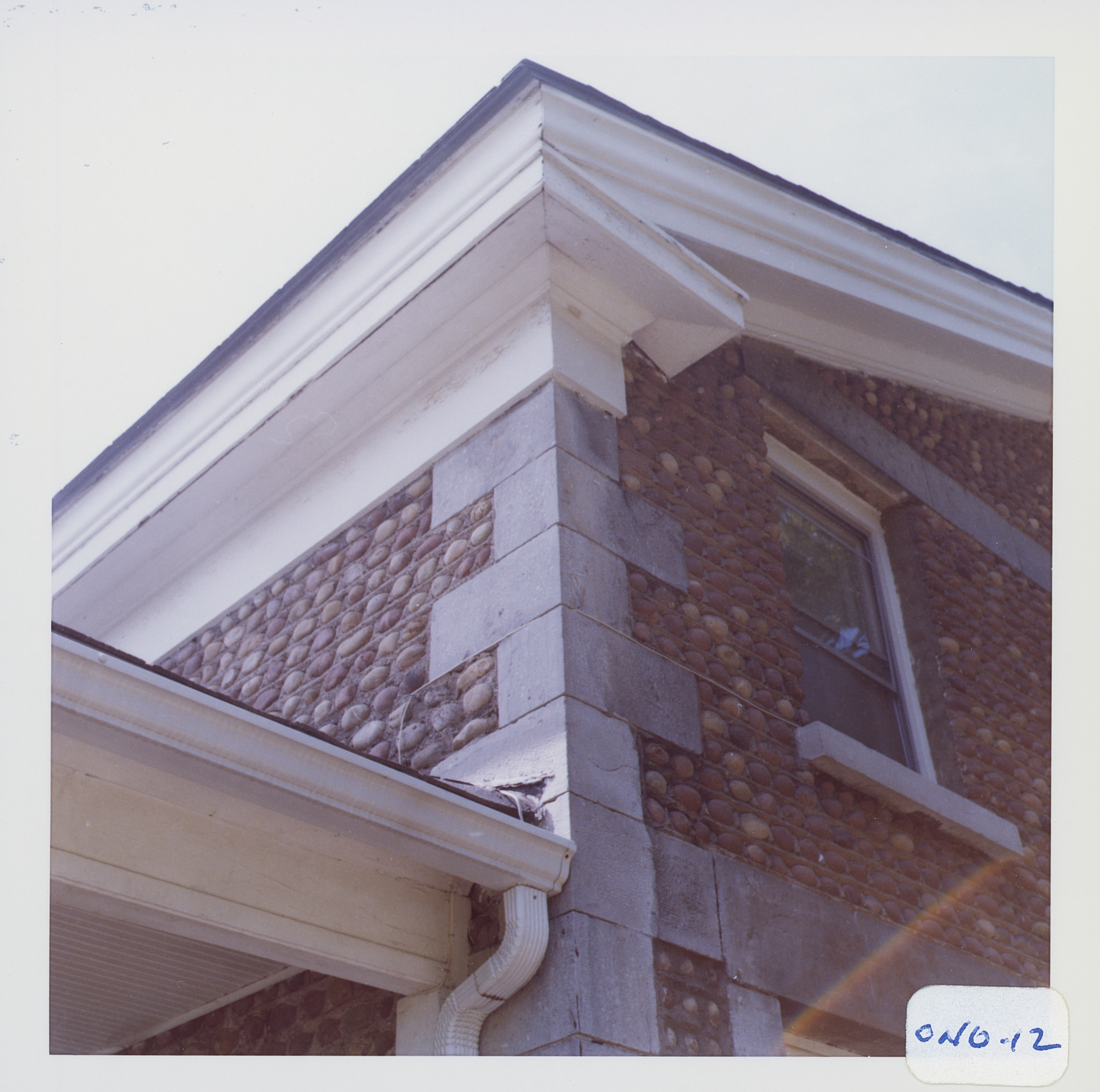
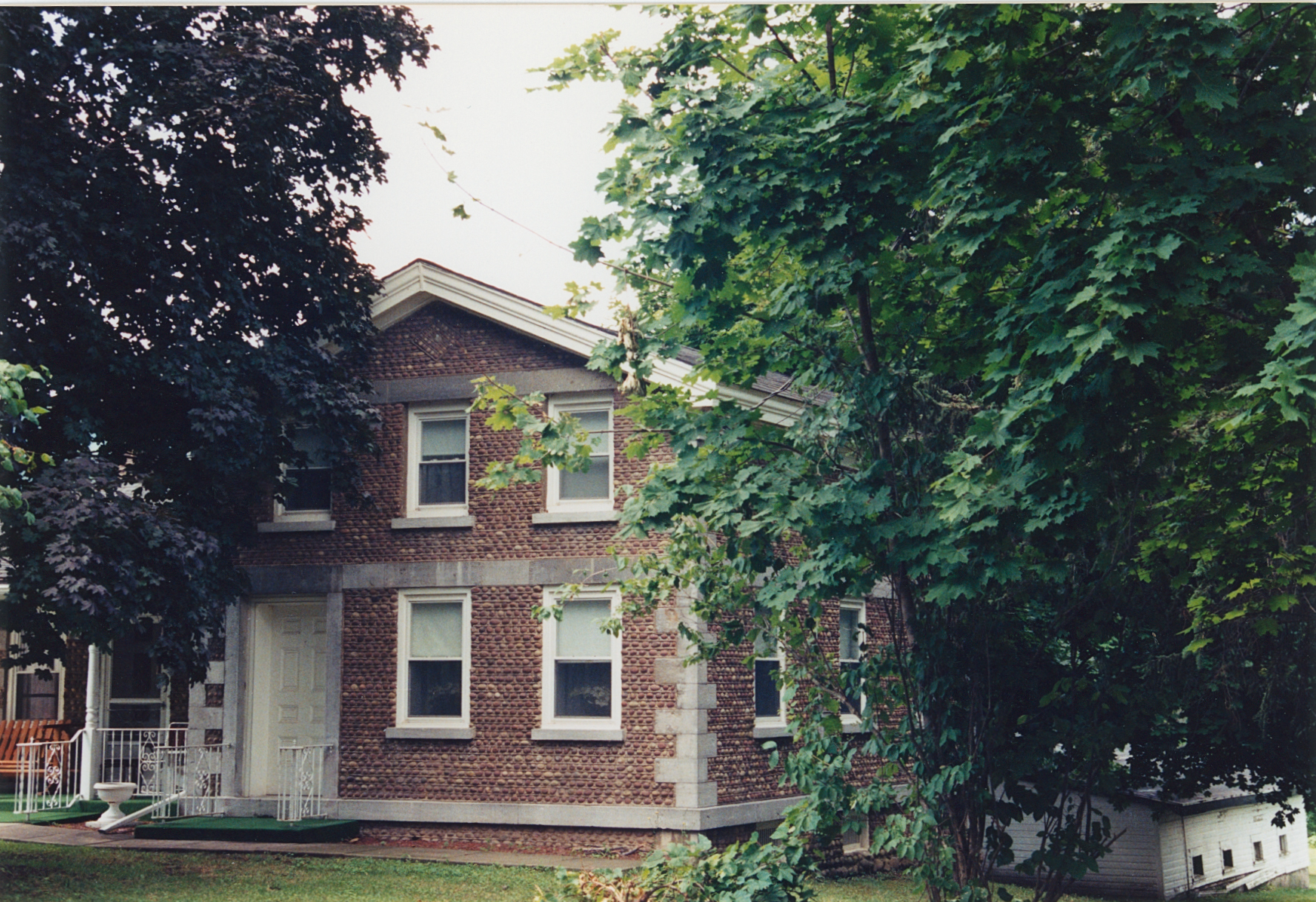
Corner structures: Uniform square cut blocks of gray limestone
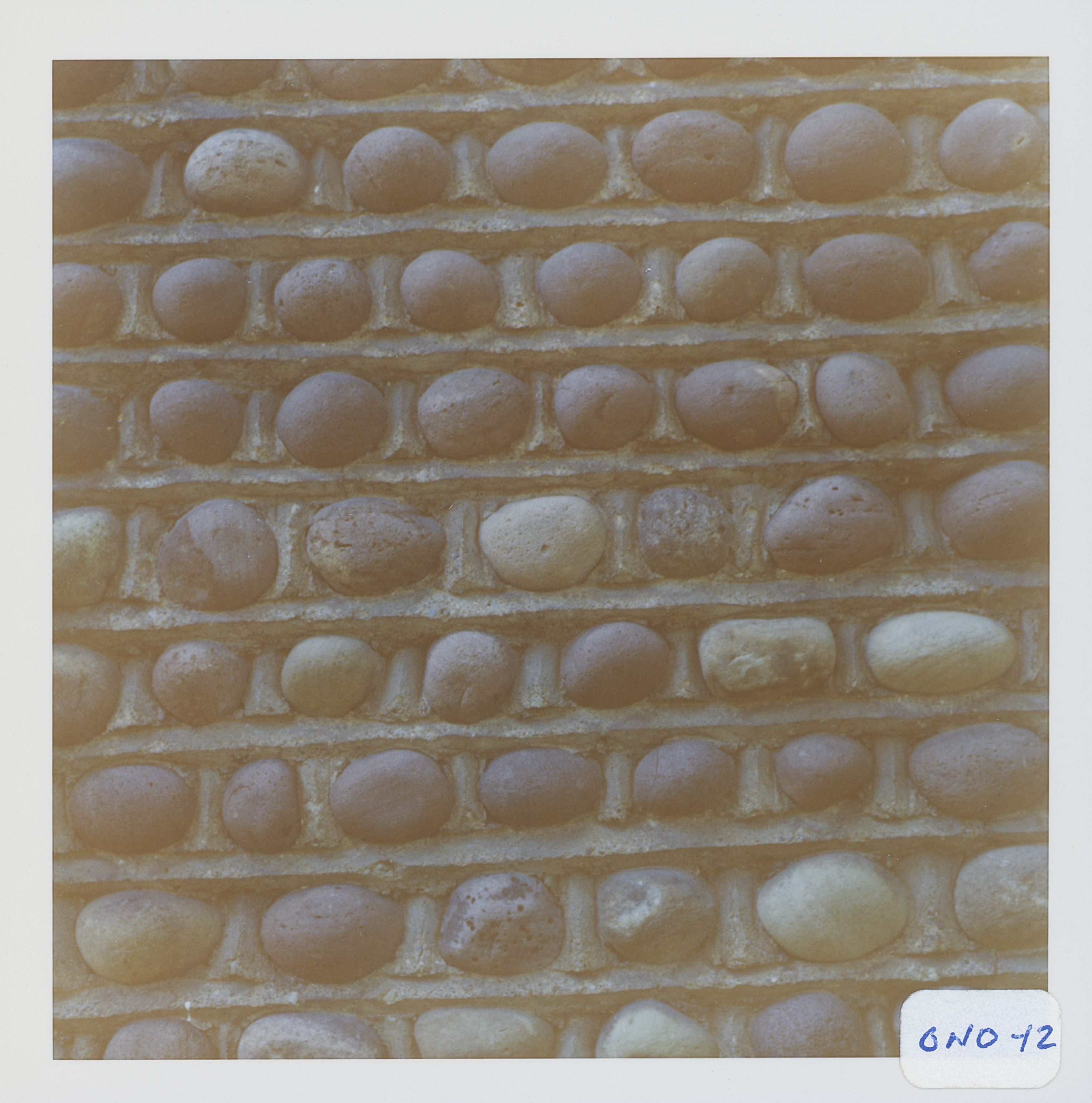
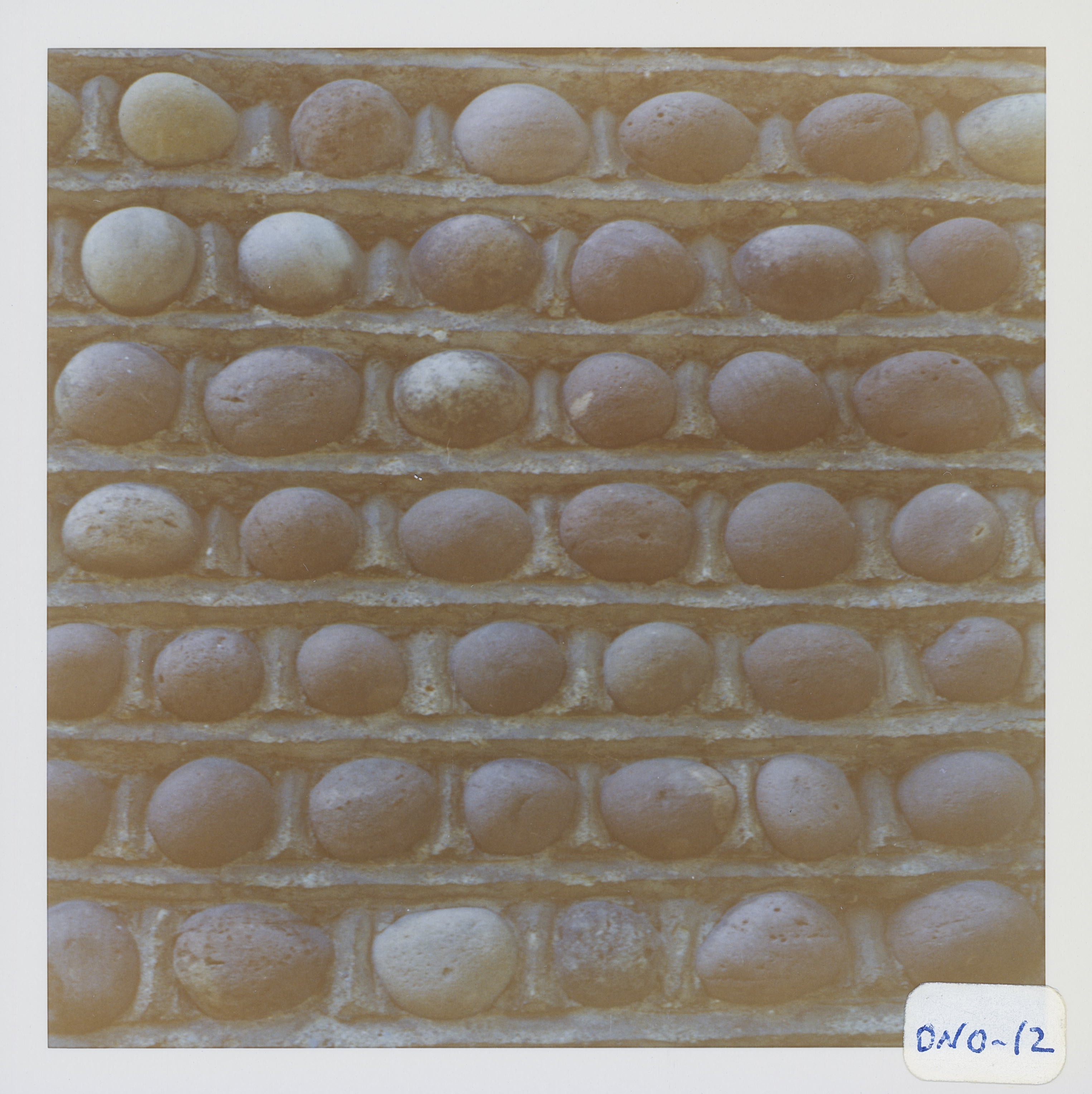
Mortar application and content: Both vertical and horizontal mortar is v'd. The verticals begin below the surface of the upper horizontal and are cut off truncate just above the lower horizontal.
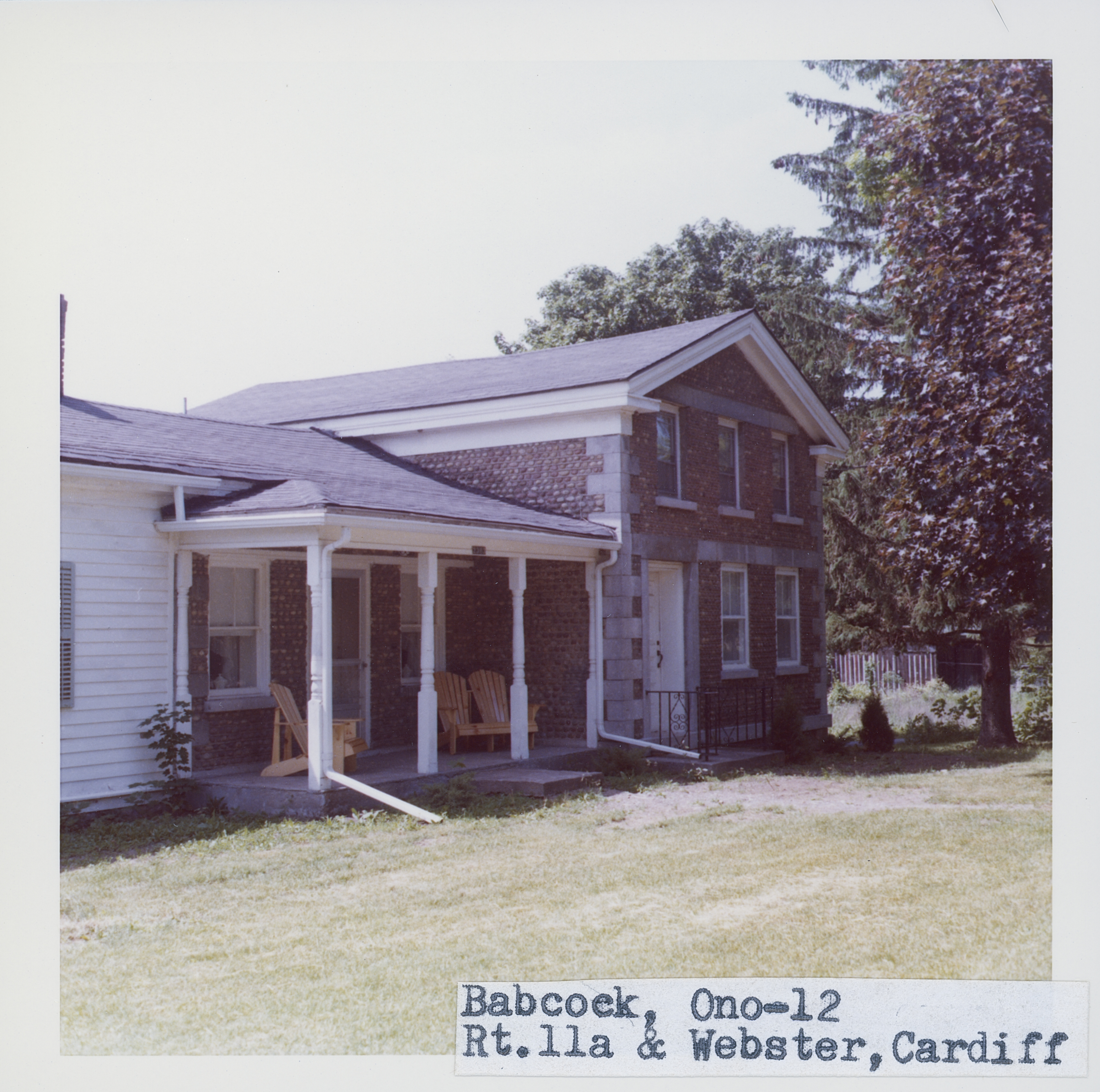
Types and uses of stones: Field Cobble stones are smooth, rounded and are laid 3 rows to the quoin in the front and sides, while the back has 2 rows per quoin.
Types and choice of windows: At the top of the first floor windows is a series of limestone blocks extending the length of the front and right sides. The blocks do not extend across the back. These obviate the necessity of having lintels at the windows.
Structures with similar masonry details:
Masons who worked on building:
Unique features: Greek Revival. Has horizontal limestone courses above 1st and 2nd floor windows. Also known as Bailey House. "Cobblestone Buildings in Onondaga County", 1992, Structure No. 19, compiled by Glenn Hinchey.
Map views courtesy Google Maps. Address is GIS Database and Google Earth confirmed; 42°52'58.25"N 76°08'31.54"W. Current owner of record, Babcock as of the 2018 Tax Roll.
Town of Lafayette and Onondaga County Maps
At Route 11a and Webster in Cardiff is a house with a 1½ story wing on the right, and a 1 story wing on the left. The quoins are uniform square cut blocks of gray limestone. The water table is made of the same limestone. At the top of the first floor windows is a series of limestone blocks extending the length of the front and right sides. The blocks do not extend across the back. These obviate the necessity of having lintels at the windows. Stones are smooth, rounded and are laid 3 rows to the quoin in the front and sides, while the back has 2 rows per quoin. Both vertical and horizontal mortar is v'd. The verticals begin below the surface of the upper horizontal and are cut off truncate just above the lower horizontal. Roudabush Survey page 80
This house at 2313 Route 11A, Cardiff, was built by Justus Newell (1807-1885) who came from a large family residing in the vicinity of Cardiff. He purchased 20 acres where this stands, in April, 1843. The house was built about 1845. It was sold to William Spencer in November, 1850. It was built of field cobbles. Newell moved to Syracuse where he became a prominent businessman. A later owner, William Stearns, restored the cobblestone house in the 1930s. Courtesy Richard Palmer.
"The Deep Greek Roots of Cobblestone Construction", by David Hanna, PhD





.jpg)
¹ Image courtesy Cobblestone Museum.
² Photography courtesy Martin and Sheila Wolfish.
³ Photography courtesy Richard Palmer.
